Why Flux3 Matters for Real-World Multimodal AI
@getflux3store
Unified Intelligence Beyond Single-Mode Models
For years, building AI that could both see and hear and speak meant stitching together separate specialist models. You might have one model for image generation, another for audio processing, and a third for natural language processing. Each pipeline had its own quirks, its own training data, and its own failure modes. The result was fragile. Errors cascaded. A misaligned image caption could ruin an entire video synthesis pass. The industry needed a different approach, something closer to how human perception works: a single architecture that handles multiple modalities without handoffs.
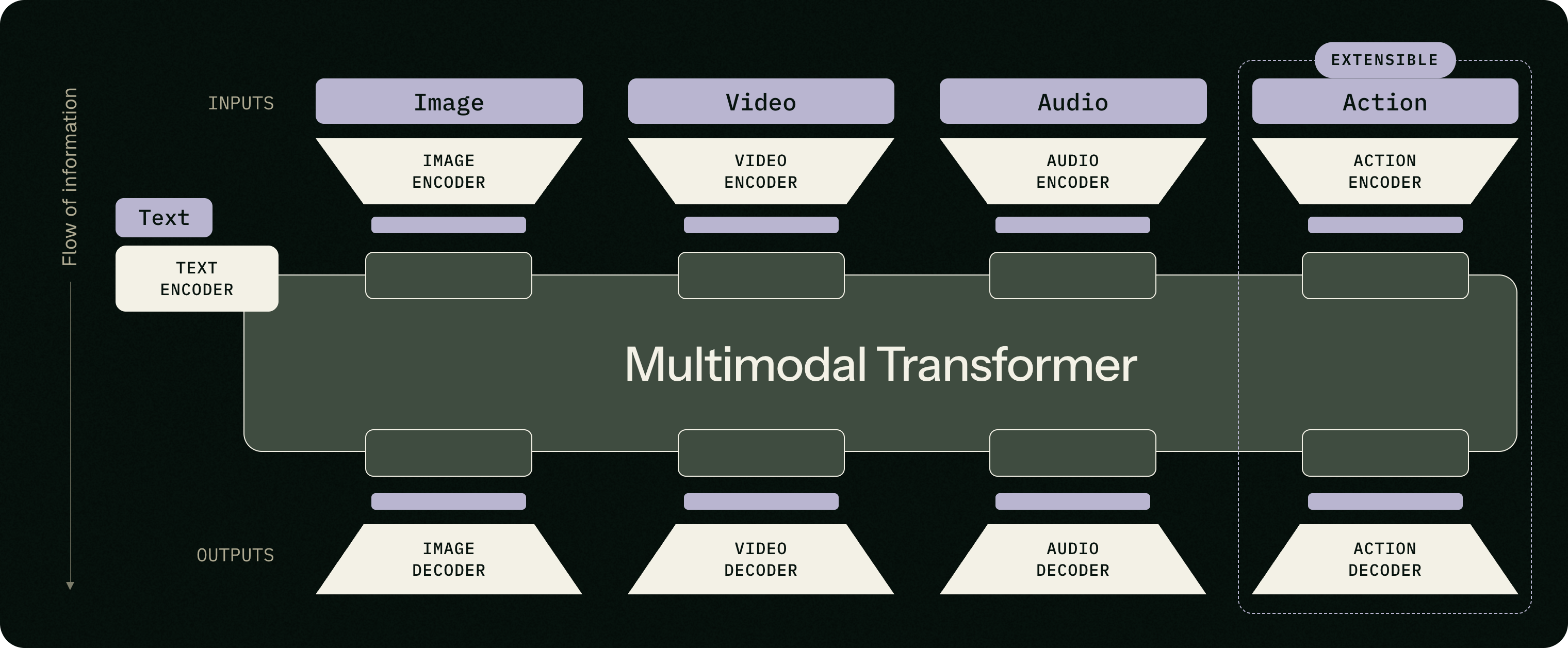
That is where the idea behind flux3 becomes relevant. As a multimodal foundation model, it treats vision, sound, and text as first-class citizens inside one unified architecture. This is not just a convenience for developers. It changes what is possible in real-world applications where latency, consistency, and context matter more than benchmark scores.
What a Unified Architecture Actually Buys You
Consider a typical deployment in computer vision. A warehouse robot needs to read a damaged label, listen for an alarm, and decide whether to reroute a package. With separate models, the vision pipeline might classify the label correctly while the audio pipeline mishears the alarm, and the decision logic has no way to reconcile the two. A unified model like flux3 processes both inputs inside the same latent space. The image and the sound inform each other. If the audio is ambiguous, the visual context can tip the balance. This kind of cross-modal reasoning is hard to achieve with ensembles.
On the generative side, the same architecture can produce a short video clip from a spoken description, then generate a matching audio track that stays in sync. Because the model shares representations across modalities, the lip movements in the video will align with the generated speech waveform. That coherence is difficult to get from separate diffusion models and transformer models bolted together after the fact.

Architectural Choices: Diffusion, Transformers, and Acceleration
Black Forest Labs built flux3 on a hybrid backbone that combines elements from diffusion models and transformer models. Diffusion handles the fine-grained details in image generation and video synthesis, while transformers manage the long-range dependencies in language and audio. This is not a new idea by itself, but the way these components interact inside a single training loop matters. The model learns to allocate attention between modalities dynamically. When it sees a high-resolution image, it can lean more on the diffusion path. When it processes a sentence, it shifts toward the transformer path.
Training and inference for a model this size require serious hardware. GPU acceleration is the standard workhorse for most teams, and flux3 is designed to take full advantage of modern GPU clusters. But not every deployment lives in a data center. For edge applications, the model can be quantized and run on specialized hardware that supports FPGA acceleration. That flexibility makes it possible to run the same architecture on an AWS cloud platform for heavy batch processing and on a local edge device for low-latency inference. The trade-off is complexity. Supporting multiple hardware targets means maintaining separate optimization paths, which adds to the engineering burden.
Practical Integration Paths
Getting a model like flux3 into production requires more than just loading weights. The team behind it provides integration options through PyTorch and TensorFlow, which cover most of the research and production ecosystem. The PyTorch path is more flexible for experimentation, while TensorFlow offers better serving infrastructure for large-scale deployments. Both paths expose a consistent API for multimodal inputs, so you can pass an image tensor, a spectrogram, and a tokenized sentence as a single batch.
For teams that want to avoid managing infrastructure entirely, the model is available as an API integration. You send a request with the raw data, and the service returns the generated output. This is the easiest route for small teams or prototypes, but it introduces latency and cost per request. For high-throughput use cases, self-hosting with GPU acceleration on an AWS cloud platform usually works out cheaper and faster.
Where It Excels and Where It Doesn't
Flux3 shines in tasks that require cross-modal consistency. Generating a narrated slideshow from a script, producing a video with synchronized sound effects, or building a visual question-answering system that can also listen to audio cues. These are exactly the kinds of problems that come up in real-world intelligence scenarios, where the input is messy and multimodal by nature.
It is less ideal for narrowly focused tasks. If you only need to classify images, a dedicated convolutional model will be smaller, faster, and cheaper to run. The unified architecture of flux3 adds overhead that does not pay off unless you actually need multiple modalities. Similarly, for pure text generation, a specialized language model will outperform it on perplexity and inference speed. The strength of flux3 is breadth, not peak performance on a single metric.
Edge Cases and Failure Modes
No model is perfect. In early tests, flux3 can struggle when modalities contradict each other. For example, if you feed it a picture of a cat and a sentence that describes a dog, it sometimes blends features rather than flagging the inconsistency. This is a known limitation of multimodal foundation models that treat all inputs as equally trustworthy. In practice, you can add a consistency-checking layer on top, but that increases latency.
Another edge case involves audio processing in noisy environments. The model was trained on clean and moderately noisy data, but extreme background noise can degrade the audio understanding. For industrial deployments, preprocessing the audio with a denoising step before feeding it to flux3 improves reliability. The same principle applies to low-light images in computer vision tasks. The model handles typical variations well, but it is not a substitute for proper sensor data.
What This Means for Practitioners
If you are building a system that needs to understand and generate across vision, language, and sound, flux3 offers a coherent starting point that reduces integration complexity. You can prototype faster because you are working with one model instead of three. The trade-off is that you inherit the model's biases and failure modes across all modalities at once. Debugging a unified model requires different skills than debugging separate pipelines. You need to think about how the latent representations interact, not just about per-modality metrics.
On the infrastructure side, plan for GPU memory. A full inference pass with all modalities active can consume more than 24 GB of VRAM, depending on the resolution and sequence length. Quantization helps, but it reduces output quality. For edge deployments, FPGA acceleration can bring memory usage down, but the development time increases. There is no free lunch here. You pick the trade-off that fits your deployment target.
Looking Ahead
Black Forest Labs is pushing toward more efficient training regimes and better cross-modal alignment. Future versions of flux3 may include adaptive routing that skips unnecessary modality branches, reducing compute for unimodal inputs. That would make the model more practical for mixed workloads where some requests are multimodal and others are not. For now, the current version is a solid foundation for teams that need genuine multimodal understanding, not just a concatenation of single-mode outputs.
If you are evaluating whether to adopt a unified architecture like flux3, start with a clear picture of your input diversity. If your data is already multimodal and your application demands cross-modal reasoning, the upfront investment in learning the model's quirks will pay off. If your data is mostly text or mostly images, stick with specialized models and save the compute budget. The right tool depends on the problem, and flux3 is a tool for the hard problems where modalities mix.